Technologies
Improved and Intensive Ponds
Ponds remain the backbone of aquaculture in Andhra Pradesh and across the world. Improved pond management applies knowledge rather than expensive infrastructure: aeration, planned feeding, water-quality monitoring, quality seed, pond preparation and biosecurity. For many farmers it is the most practical route to better results.
From extensive to intensive
Extensive ponds rely on natural productivity with little input. Semi-intensive ponds add fertilisation and supplementary feed. Intensive ponds use complete feeds, mechanical aeration and frequent monitoring to support much higher stocking densities. Each step increases yield, cost and the consequences of mistakes.
Pond preparation
Drying the pond bottom, removing excess sludge, liming to correct pH and sanitise, and filling with screened water set the stage for a healthy cycle. Pond preparation is the simplest biosecurity measure available and the one most often skipped under time pressure.
Aeration and oxygen
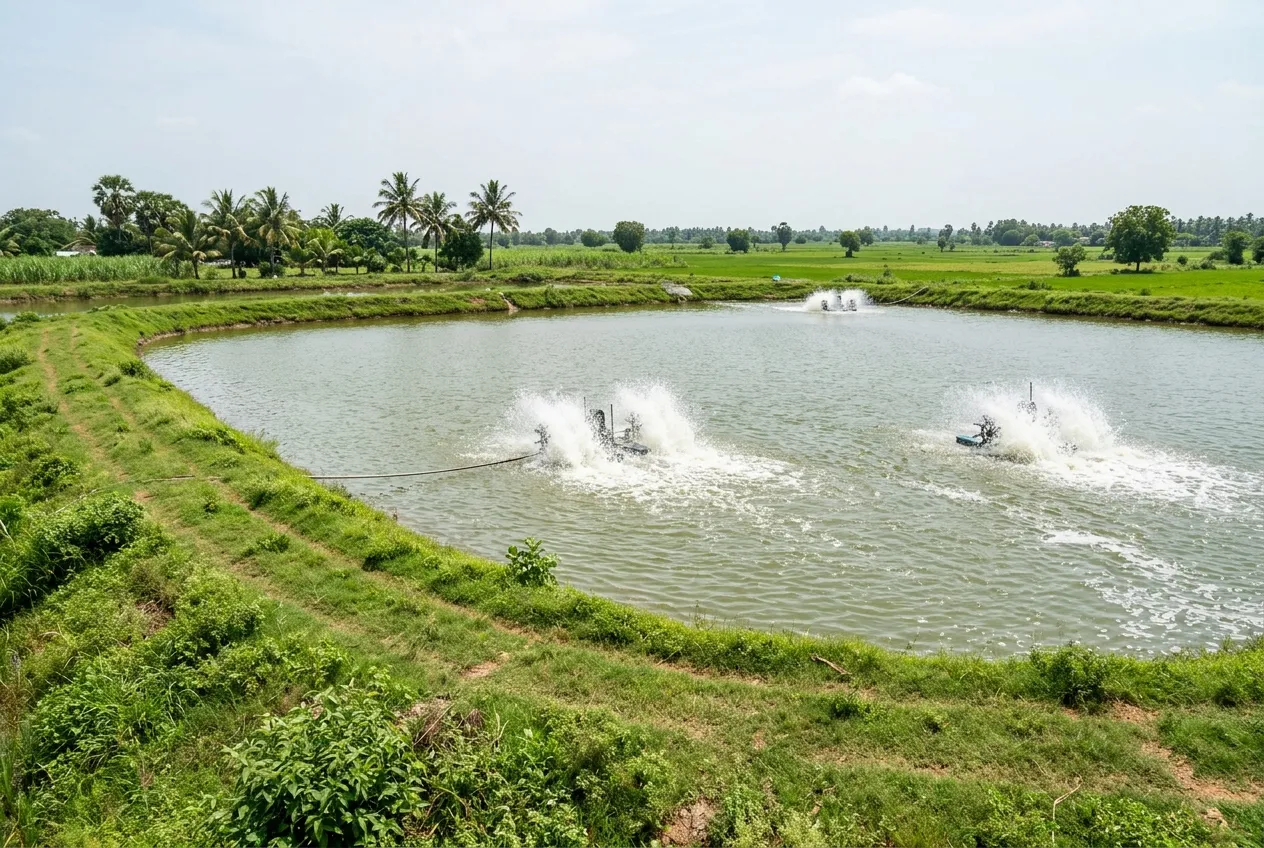
Dissolved oxygen is the most limiting factor in intensively stocked ponds, especially before dawn and during cloudy weather when algae stop producing oxygen. Paddlewheel and aspirator aerators add oxygen and create circulation that concentrates waste in the pond centre. Aerator placement, run-time scheduling and backup power are important management decisions.
Feed management
Feed is usually the largest operating cost in intensive ponds. Feeding trays, feeding schedules adjusted for temperature and oxygen, and regular sampling of growth allow farmers to feed what the animals actually eat. Uneaten feed becomes ammonia and algal blooms.
Water-quality monitoring
Measuring dissolved oxygen, pH, ammonia, nitrite, alkalinity and transparency on a regular schedule helps farmers anticipate problems rather than react to mortality. Simple record keeping over several cycles reveals patterns unique to each pond.
Biosecurity and health
Screening inlet water, quarantining or sourcing certified seed, controlling access, disinfecting equipment and avoiding the sharing of nets between ponds all reduce disease risk. Responsible use of medicines, under professional guidance and respecting withdrawal periods, protects both the farm and its markets.
Effluent and neighbours
Intensive ponds discharge nutrient-rich water at harvest and during exchanges. Settling ponds, reuse of effluent for agriculture and coordinated discharge timing reduce impacts on shared water bodies and downstream farms.